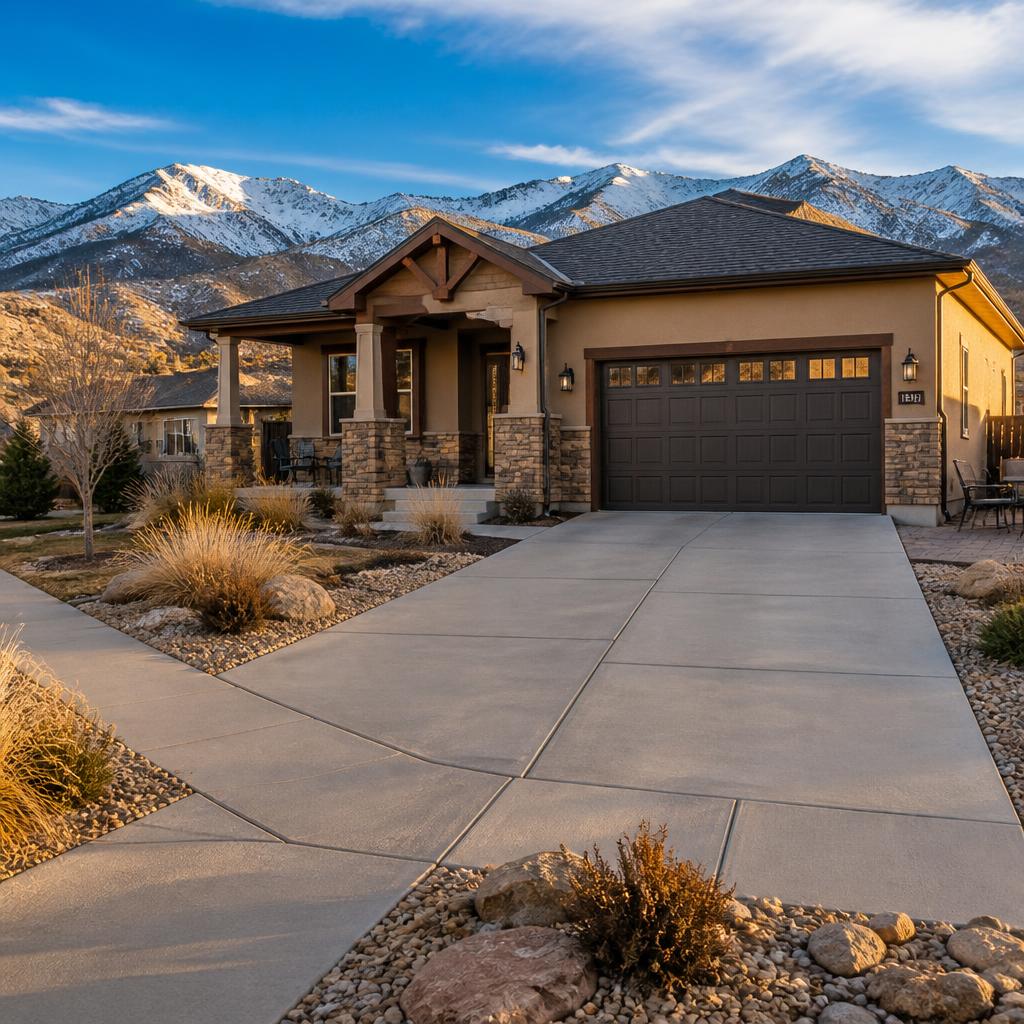
The definitive Albuquerque homeowner's guide to concrete leveling — why Rio Grande valley slabs settle, how to read the warning signs, foam vs. mudjacking vs. replacement, realistic cost, and the year-round routine that keeps concrete flat for decades.
If you own a home in Albuquerque long enough, something concrete is going to move. A driveway panel drops a half inch below the garage apron. A patio slab pulls away from the house. The sidewalk in front develops a lip you learn to step over. It's rarely dramatic and almost never happens overnight — but it happens, and the reason is baked into where we live.
Between expansive Pierre shale clay, more than 100 freeze-thaw cycles a year, high-altitude UV, monsoon downpours, chinook thaws, and dry summer drought stretches, the Rio Grande valley asks more from residential concrete than almost any other market in the country. The good news: **most settled slabs in Albuquerque don't need to be replaced.** They can be lifted back to grade with polyurethane foam in a few hours, for a fraction of replacement cost, and — with the right drainage and maintenance around them — they stay there.
This is the complete homeowner's guide to that whole picture: why concrete sinks here, how to spot the warning signs early, what your realistic repair options look like, what a lift actually costs and lasts, how to maintain what you have, and when to bring in a professional. Every section links to a deeper article in our Learning Center if you want to go further on any single topic.
1. Why Concrete Settles in Albuquerque
A concrete slab is only as stable as what's under it. The concrete itself is rarely the problem — the soil, drainage, and moisture cycles are. Along the Rio Grande valley, five forces do most of the damage:
Expansive Pierre Shale Clay
Much of the Albuquerque metro sits on Pierre shale clay — a marine sedimentary soil that swells when wet and shrinks when dry. Over an annual moisture cycle, the same square foot of soil can change volume enough to visibly heave and drop the slab above it. Repeat that for a decade and you have settlement. See how Albuquerque expansive clay soil affects more than just concrete for the deeper mechanism.
Freeze-Thaw Cycles
Albuquerque runs through more than 100 freeze-thaw cycles a year — one of the highest counts in the U.S. Every cycle expands any water sitting in a joint, crack, or the sub-base by roughly 9% and then contracts it. Over years, that mechanical action opens joints, spalls edges, and undermines slabs. Detailed write-up: how Albuquerque winters affect concrete.
Drainage and Water Management
Water in the sub-base is the single most common driver of premature settlement. A downspout that discharges next to a driveway, a sprinkler head that hits the slab, or a bed grading toward the house will cut a driveway's practical life roughly in half. Read how poor drainage causes concrete settlement in Albuquerque and 7 common drainage mistakes that lead to concrete settlement in Albuquerque.
Poor Original Sub-Base Preparation
Some settlement traces to the day of the pour. Slabs poured on unimproved expansive clay, over marginal fill in newer subdivisions, or without adequate compaction begin settling early and rarely stop on their own. Older neighborhoods like the Old North End often have original driveways still serviceable at 40+ years because the pours were done well; some newer builds show trouble inside a decade because the sub-base wasn't.
Tree Roots and Landscaping Choices
Large trees compete with concrete for both space and water. Roots can lift panels from below (heave) or, more commonly here, pull moisture out of the clay and cause the soil to shrink away, allowing the slab to drop. See can tree roots cause concrete to sink in Albuquerque and landscaping choices that protect (or damage) your concrete.
For a broader walk through all the local causes together, our why concrete sinks in Albuquerque article is a good deeper read. Elevation itself doesn't damage concrete, but the *effects* of elevation — UV, temperature swings, freeze-thaw counts — do; see does Albuquerque high elevation affect concrete.
2. Warning Signs to Watch For
Concrete rarely fails without warning; homeowners just learn to walk past the warnings. A 20-minute walk of the property once a season catches most problems while they're still cheap to fix.
- **Vertical offset at a joint** — one side of a control or expansion joint sits lower than the other
- **Water pooling** where it used to drain — see water pooling on driveway
- **Gaps opening between the slab and the house or garage apron**
- **Cracks widening or new cracks appearing** — see when should you be concerned about cracks in concrete
- **Patio furniture that rocks** on a surface that used to be level
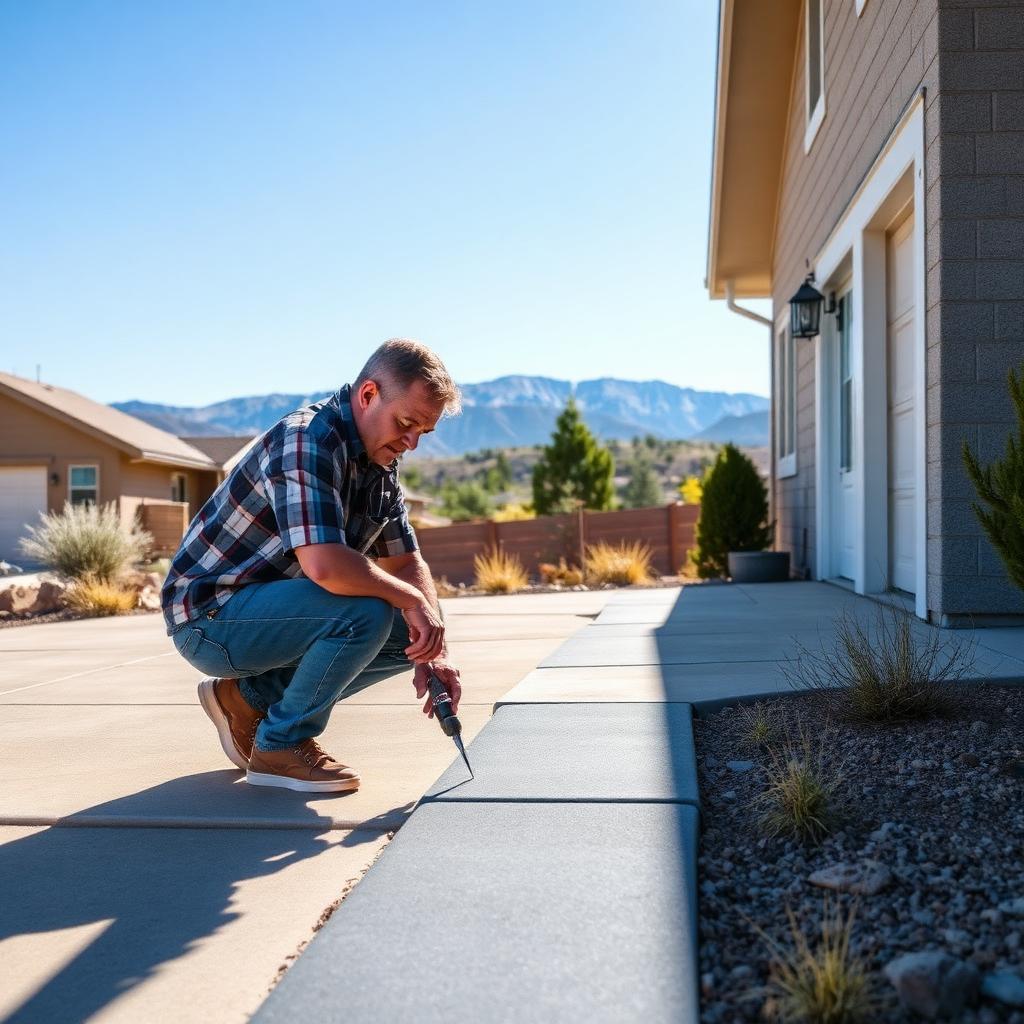
- **Trip lips** you catch a heel or shoe toe on — measure with a tape, 1/4 inch or more is an actionable hazard (how to spot trip hazards around your home)
- **Garage floor tilting toward or away from the door**
- **Doors that suddenly rub or won't latch** on garage floors and slabs at grade
Our detailed field guides on this: 5 signs it's time to have your concrete evaluated, signs your concrete needs leveling, and how to inspect your property for early signs of concrete settlement.
One important distinction worth pinning down early: **slab settlement** vs. **foundation settlement**. They look similar from the yard but require completely different fixes. Our article on is it foundation settlement or just uneven concrete walks through the tells.
3. Areas That Settle Most Often
Not every area moves at the same rate. Some spots concentrate all three risk factors — water, clay, and traffic — and predictably show up on Albuquerque repair lists:
- **Driveway aprons and garage transitions** — traffic loads plus water off the roof concentrate here
- **Front sidewalks near mature trees** — root competition and irrigation both work against the slab
- **Patio slabs against the house** — grade and downspouts push water into the sub-base
- **Garage floors** — often poured on marginal fill and hit by melting snow off vehicles all winter
- **Pool decks** — irrigation, splash-out, and heavy furniture all stress coping and first-row slabs
- **HOA and commercial walkways** — high foot traffic magnifies every millimeter of movement (see when should businesses repair uneven sidewalks in Albuquerque)
4. Repair Options — Plainly Explained
Polyurethane Foam Leveling (The Default in Albuquerque)
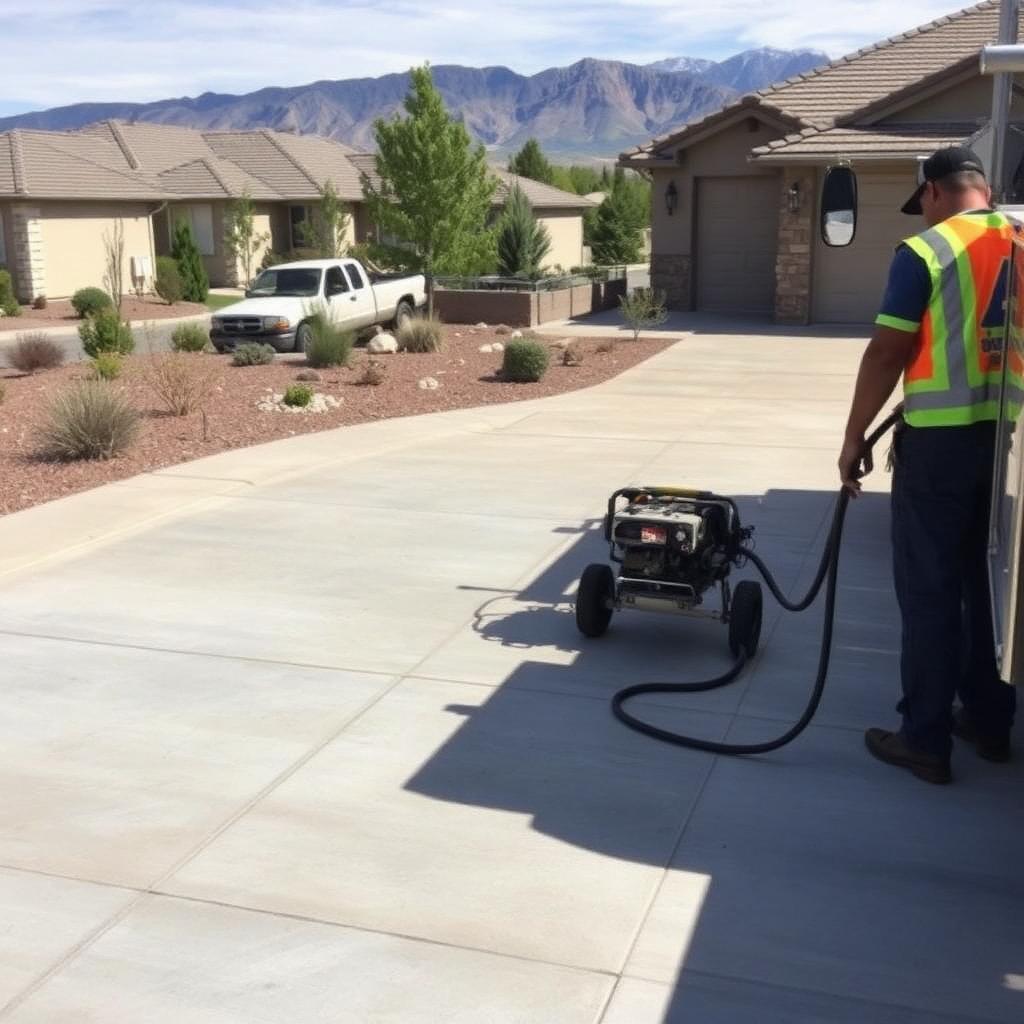
Small ports (about 3/8 inch across) are drilled through the slab. A two-part polyurethane foam is injected beneath, expands, and lifts the panel back to grade with millimeter-level control. Cure time to walkable is about 15 minutes; to vehicle traffic, typically 24 hours. The material is inert, waterproof, and doesn't add significant weight to the sub-base — a real advantage on expansive clay. Detailed comparison: polyurethane foam vs. mudjacking.
Mudjacking
The older method — a cement-and-slurry mix pumped through larger holes. It works, but the holes are more visible, the material is much heavier (a real downside on soft clay), and cure times are longer. Still viable in some situations; foam has become the default for residential work in Albuquerque.
Concrete Replacement
Right answer when the slab has widespread structural failure, badly spalled surface, multiple large cracks, or has already been lifted once and is failing again. Replacement takes days, costs several times more than leveling, and — if drainage isn't fixed first — puts a fresh slab on the same problem soil. See concrete leveling vs. replacement for where the line falls.
Cracked but Structurally Sound Slabs
Cracks alone don't disqualify a slab from lifting. Our guide on can cracked concrete be leveled explains which cracks are compatible with foam lifting and which are red flags.
5. What It Actually Costs
Realistic 2026 pricing for residential concrete leveling in Albuquerque:
- **Single sidewalk panel:** $300–$600
- **Small patio section or garage floor corner:** $500–$1,200
- **Driveway apron or one settled slab:** $600–$1,500
- **Full driveway lift (multiple panels):** $1,500–$3,500
- **Pool deck sections:** $800–$2,500
Full replacement of the same slabs would run **3–5x** those numbers, plus days of downtime and a brand new slab facing the same soil. Detailed breakdown: how much does concrete leveling cost and the deeper local guide concrete leveling cost in Albuquerque.
One question that comes up a lot: does homeowner's insurance help? Almost never — earth-movement exclusions and gradual-damage clauses knock out most claims. Full explanation: does homeowner's insurance cover concrete settlement in Albuquerque.
6. How Long Foam Leveling Lasts
Polyurethane foam itself is essentially permanent — it doesn't break down, absorb water, or lose volume. What determines how long a lift *holds* is what the soil under it does next. On a slab whose drainage was fixed at the same time as the lift, results routinely last **10+ years and often the remaining life of the slab.** On a slab where the drainage that caused the original settlement was never addressed, the same underlying process can re-open a void in a few years. Detailed article: how long does concrete leveling last.
This is why any honest Albuquerque leveling contractor's first move is to walk the property looking at downspouts, sprinklers, and grading — not just the settled slab.
7. What Happens During an Estimate
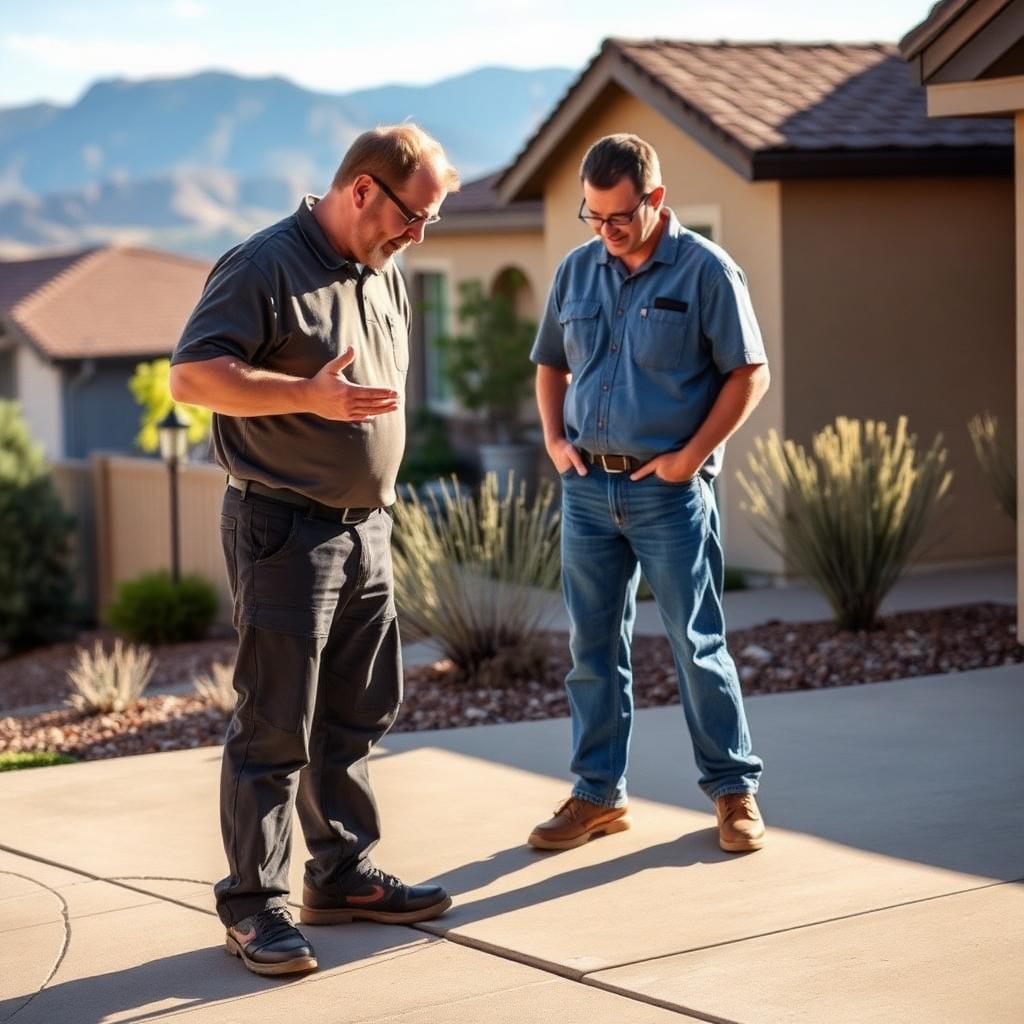
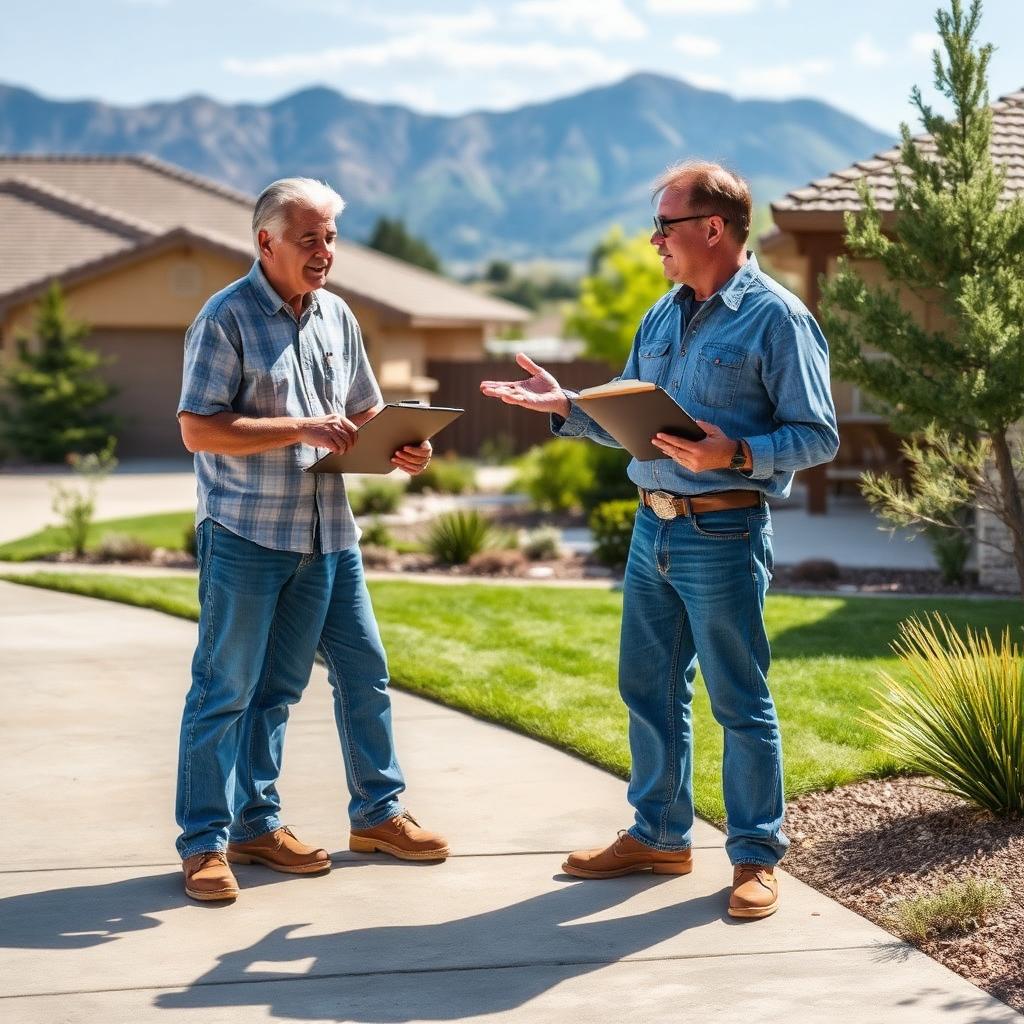
A good estimate is not a quick eyeball. Expect a contractor to walk the property with you, measure each settled panel (a smartphone laser or a straightedge and tape), photograph every affected area, check downspouts and grading, note which slabs are candidates for lifting vs. replacement, and give you a written scope and price. It typically takes 30–60 minutes for a residential visit. Full walkthrough: what happens during a concrete leveling estimate and the step-by-step guide what happens during a concrete leveling estimate — step-by-step guide.
If it's your first time hiring for this kind of work, 10 questions to ask before hiring a concrete leveling contractor is worth reading before the appointment.
8. Getting Ready for Repair Day
A little prep on your side makes the visit faster and cleaner: move vehicles off the affected slabs the night before, unlock any gates, coil up hoses along the work area, and pull outdoor furniture back a few feet. The how to prepare your property for a concrete leveling project checklist covers the full list.
For a sense of how long the visit itself takes, see how long does a typical concrete leveling project take. Most residential jobs are half-day work.
9. The Year-Round Maintenance Plan
Once a slab is level (or if it's still fine), the goal shifts to keeping water and freeze-thaw from starting the cycle over. A workable Albuquerque routine:
Spring
Walk the property after snowmelt. Note anything that moved over winter, reseal joints that dried out, and get sprinklers dialed in before they run all summer. Full checklist: spring concrete inspection checklist for Albuquerque homeowners.
Summer
Watch what monsoon storms actually do on your property — where does sheet flow go, where does water back up. Adjust sprinklers off the slab. Address any low spots that puddle.
Fall
The highest-leverage window. Reseal control and expansion joints, extend downspouts, winterize sprinklers before hard freeze, stage sand or magnesium chloride (never rock salt). Full guide: fall concrete maintenance checklist for Albuquerque homeowners.
Winter
Shovel first, treat second. Sand for traction, magnesium or calcium chloride only when melting is actually needed. Don't let snow repeatedly refreeze on slabs.
For the broader prevention playbook, 10 ways Albuquerque homeowners can help prevent concrete settlement covers the highest-return actions in a single list. And on whether a sealer is worth adding to that routine, see do concrete sealers actually help in Albuquerque.
10. Special Situations
Selling Your Home
Uneven concrete is one of the first things a buyer's agent points out on a walkthrough, and inspectors routinely note trip hazards and drainage issues. Fixing it before listing is almost always the higher-ROI move. See should you repair uneven concrete before selling your Albuquerque home and can uneven concrete affect your home's value.
Commercial Properties
Trip-hazard liability and ADA compliance change the math for businesses. A proactive maintenance program pays for itself many times over. Detailed guide: commercial sidewalk and walkway maintenance for Albuquerque businesses and warehouse floor leveling case study.
HOA Common Areas
HOA-maintained sidewalks and walkways carry their own governance and budgeting challenges. Our companion article: how HOA communities can manage uneven sidewalks and common areas.
Wait vs. Repair Now
Not every offset needs an emergency fix. Small, stable movement can be monitored; active or worsening settlement usually should not be. Our decision guide: should you repair uneven concrete now or wait and how small concrete problems can become expensive repairs.
11. Common Myths About Concrete Leveling
A few beliefs about leveling still float around Albuquerque that don't hold up on inspection — that foam damages the sub-base, that lifted slabs always crack, that mudjacking is 'more permanent,' that any cracked slab must be replaced. We take these apart one at a time in 7 common myths about concrete leveling.
12. Best Time of Year to Schedule
Foam leveling can be done nearly year-round in Albuquerque — the material cures at surprisingly low temperatures. That said, dry stretches in **late spring, summer, and early fall** are ideal because the sub-base isn't saturated and joint sealing can be paired with the lift on the same visit. Full write-up: what is the best time of year for concrete leveling in Albuquerque.
Frequently Asked Questions
Is concrete leveling worth it in Albuquerque?
For most structurally sound slabs, yes. Leveling typically costs 20–35% of replacement, restores the slab in hours instead of days, and — with drainage fixed — holds for the remaining life of the concrete. Detailed answer: is concrete leveling worth it.
How much does concrete leveling cost in Albuquerque?
Most residential jobs land between $300 and $3,500 depending on the number of panels and the amount of lift needed. A single sidewalk panel or garage floor corner is often under $700; a full driveway lift is typically $1,500–$3,500. See our Albuquerque concrete leveling cost guide for detailed ranges.
Will insurance pay for it?
Rarely. Standard homeowner's policies exclude earth movement and gradual damage — which describes nearly all Albuquerque settlement. Narrow exceptions exist for sudden events like a burst pipe. Full explanation: does homeowner's insurance cover concrete settlement.
How long does a typical job take?
Most residential leveling projects are done in a single half-day visit. Foam cures to walkable in about 15 minutes and to vehicle traffic in roughly 24 hours.
Do I need to fix drainage first?
Ideally at the same time. Lifting a slab without addressing the water that caused it to sink usually means lifting the same slab again in a few years. Any thorough estimate includes a drainage walk.
Final Thoughts
Concrete settlement is a normal part of homeownership on the Rio Grande valley, but it doesn't have to be an expensive one. The homeowners who handle it well share a pattern: they walk their property once or twice a year, fix small drainage problems before they become big soil problems, lift settled slabs early while it's still a simple job, and use professional-grade materials for maintenance instead of shortcuts.
Every article linked in this guide goes deeper on a single piece of that picture. Whether you're troubleshooting one settled panel or building a long-term plan for a Albuquerque property, the Learning Center is the whole library.
When you're ready for a professional evaluation, contact Albuquerque Concrete Leveling for a free on-site walkthrough. Call **(505) 388-0089** or request an estimate online. We'll walk the property with you, point out anything you should watch, and give you an honest recommendation on whether to lift, wait, or replace.